

CareTech Human launches Biomonix for consumer health tracking

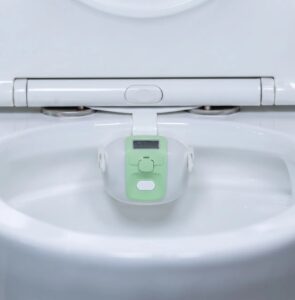
Cornell-based startup CareTech Human is bringing its health-sensing technology from the clinical setting into the home with the launch of Biomonix, a new consumer wellness platform designed to passively collect health information during everyday bathroom use. 

The company officially launched Biomonix on October 5, 2026, and is now looking for early adopters to try the product and provide feedback as it continues refining the technology and exploring new applications. . Biomonix represents CareTech Human’s expansion beyond healthcare market, bringing technology originally developed and validated in medical applications into the broader consumer health and wellness. Rather than asking users to manually track information or complete tests, the company’s technology is designed to collect data passively through a sensor installed in the toilet. The approach addresses one of the challenges CareTech Human has been working on since its early clinical applications: collecting useful health information in a way that fits naturally into a person’s daily routine. 

The company initially developed its technology with urologists, with a focus on automating information such as urinary frequency, volume, and flow that can be important to understanding a patient’s health. Much of that information is generated at home, outside of a clinical setting, making passive monitoring a potentially useful tool for both patients and providers. With Biomonix, CareTech Human is applying the same underlying sensing technology to a broader consumer audience. The product is currently focused on wellness, with the ability to provide insights related to areas such as hydration, recovery, digestion, and urinary health. This shift reflects a broader opportunity the company sees in the growing market for personal health tracking. Wearable devices such as Oura, WHOOP, Fitbit, and Apple Watch can give users information about signals including heart rate, heart rate variability, sleep, and activity. Biomonix is designed to add another layer of information by looking at biological signals found in urine and other waste products. 

The distinction is particularly relevant for areas such as hydration. Rather than relying only on how much water someone reports drinking, CareTech Human is interested in the biological information that can provide additional context about what is happening inside the body. The company also sees potential in helping users understand whether changes to their diet, supplements, or other wellness routines are producing meaningful changes over time. By collecting information passively, Biomonix is designed to build a longitudinal picture without requiring users to remember to log each interaction. 

Privacy and ease of use are central to the approach. The system does not use a camera or microphone, relying instead on sensors to collect information. It is also designed to operate passively, without requiring users to initiate a test each time they use the bathroom. 

That passivity is an important part of CareTech Human’s longer term vision for toilet-based health monitoring. For a technology to become part of everyday life, the company believes it needs to work in the background rather than depend on people consistently remembering to maintain it. 

While Biomonix is currently positioned as a wellness product, CareTech Human sees the technology eventually supporting more medically oriented applications. One longer term possibility is a more comprehensive urine health assessment that could provide supplemental information for a person or their health care provider. This would build on the company’s original clinical work while creating a bridge between personal wellness and medical care. Instead of requiring consumers to engage with medical monitoring all the time, the technology could provide ongoing information through normal daily routines and make more detailed health information available when it becomes useful. 

As the company expands beyond its original focus on clinical urology, Biomonix offers a new way to think about the bathroom as a source of health information, bringing passive sensing into an area of personal wellness that traditional wearables cannot fully capture. 
Persista Bio Advances Cell Encapsulation Technology With FuzeHub Grant

Persista Bio, a Center for Life Science Ventures client, was awarded a $65,000 FuzeHub Manufacturing Grant that will add the capability to manufacture custom cell capsules as the company explores a range of cell therapy treatments.

The technology aims to provide an alternative to conventional treatments for chronic conditions such as type 1 diabetes (T1D), for which existing treatments can leave patients on lifetime immunosuppressants, with costs and additional health concerns multiplying over time.

Specifically, Persista Bio is developing a fully implantable membrane encapsulation system that holds and supports therapeutic cells designed to provide long-term treatment. Since T1D patients have low-to-zero function in their pancreas, this system is designed to mimic the blood sugar regulation process over the long term without suppressing immune system function.

The company licensed its technology from Cornell through the Center for Technology Licensing.

The $65,000 grant will help Persista Bio continue advancing its long-term cell implant with the goal of allowing T1D patients to live more normally while improving day-to-day quality of life, reducing costs over time, and addressing the long-term health implications of the condition and its treatment.

Persista Bio was one of ten collaborative project awardees selected from a record-breaking pool of 59 applicants for FuzeHub’s 2026 Manufacturing Grants.

With this grant, Persista Bio will also be able to expand its cell therapy technology to explore treatments for conditions including metabolic diseases, hormone and enzyme replacement, chronic pain, and inflammatory conditions. The continued development of this technology could help advance the future of cell therapy solutions and expand access to new approaches for treating chronic conditions.

Inso Biosciences Developing Rapid Microfluidic Sample-to-Library Workflow for Nanopore Sequencing

Researchers from Center for Life Science Ventures client Inso Biosciences and the University of Washington have developed a technology for isolating high-molecular-weight DNA and preparing libraries for nanopore sequencing directly from samples in a single microfluidic cartridge.

Described in a MedRxiv preprint last month, the method uses Inso’s yet-to-be commercialized microfluidic micropillar platform to generate sequencing-ready libraries from various sample types in as little as 30 minutes with input amounts as low as a single drop of blood.

Inso Bio’s technology was originally invented and developed in the lab of Harold Craighead, the Charles W. Lake Professor of Engineering Emeritus in Cornell Duffield Engineering.

As a graduate student in Craighead’s lab, Inso co-founder and CEO Harvey Tian coinvented the technology with fellow co-founder and CSO Adam Bisogni. The team exclusively licensed the technology from Cornell and raised $2.2 million in pre-seed financing in 2022 to commercialize the platform.

The technology isolates and purifies high-molecular-weight DNA by entangling the molecules onto micropillars in a microfluidic channel. Because the micropillar approach isolates DNA through gentle physical entanglement, it eliminates tube transfers, centrifugation, and intermediate elution steps required for traditional affinity binding-based approaches. As a result, the method minimizes DNA loss and mechanical shearing while reducing hands on processing time.

Read the full story by Huanjia Zhang on GenomeWeb.

Renerva Begins First-in-Human Study for Novel Device to Prevent Neuroma Pain

Renerva, Inc., a Center for Life Science Ventures client developing medical devices for peripheral nerve repair, has received approval from the U.S. Food and Drug Administration to launch a first-in-human clinical study of its Renerva PNM-CAP™ nerve-cap device.

The study will take place at The Ohio State University Wexner Medical Center and will be led by Principal Investigator Dr. Amy M. Moore, MD, who holds the Robert L. Ruberg MD Alumni Endowed Chair of the Department of Plastic and Reconstructive Surgery     .

The device is designed to inhibit neuroma, which is disorganized nerve growth that occurs after a nerve is severed. Neuromas often develop after extremity amputations or other nerve injuries, as the ends of a nerve attempt to regenerate but can’t find a target. The resulting formation of a tangled mass of nerve fibers causes chronic, intractable pain for many of the nation’s two million amputees, often leading to reliance on opioids and reduced quality of life.

“Receiving IDE approval is a pivotal milestone for Renerva, transitioning us into a clinical-stage company and significantly de-risking our technology path,” said Lorenzo Soletti, CEO of Renerva. “This achievement, which allows us to proceed with our first-in-human study, is a major validation of our science and a critical value inflection point for the company. We are honored to partner with Dr. Amy M. Moore and her world-class team at The Ohio State University, whose unparalleled expertise will be invaluable as we work to establish a new standard of care.”

Implanted at the end of a transected nerve, the Renerva PNM-CAP™ device curtails neuroma development by providing small, separated paths for nerve fibers, or axons, to penetrate as they attempt to regrow. By guiding and limiting axonal growth, the device allows axons to gradually exhaust their regenerative potential while remaining isolated from one another, making neuroma formation less likely. The device also shields the nerve ending from surrounding tissue signals that can trigger disorganized growth.

The IDE approval for the device was supported by robust preclinical data published recently in npj Regenerative Medicine. In those studies, the Renerva PNM-CAP™ device reduced nerve growth by as much as 16-fold compared with standard care and demonstrated a 3.5-fold reduction in average pain behavior over four months.

“Our preclinical studies demonstrate that the PNM-CAP technology has a profound impact on inhibiting nerve growth, a key event in neuroma formation,” said Bryan Brown, Chief Technology Officer of Renerva.

The upcoming clinical trial is designed to provide the first evidence of how the Renerva PNM-CAP™ device performs in patients.

Founded in 2017 at Cornell and the University of Pittsburgh, Renerva has incubated with the CLSV since 2020. The company is headquartered in Pittsburgh with a satellite location in Ithaca.


About Renerva, Inc.

Renerva is a medical device company committed to developing solutions for peripheral nerve injuries and damage. Renerva’s initial therapeutic focus is on the 500,000+ Americans receiving extremity amputation every year. Privately held, Renerva is headquartered in Pittsburgh, Pennsylvania. To learn more or stay in touch, please visit www.renerva.com.

About OSU

The Ohio State University Wexner Medical Center is one of America’s top-ranked academic medical centers, committed to improving health through innovations in research, education, and patient care. The Department of Plastic and Reconstructive Surgery at The Ohio State University is a leader in educating future surgeons and providing the highest quality reconstructive and aesthetic care, featuring the largest team of reconstructive microsurgeons in the Midwest.

Contact Information

Media contact: media@renerva.com

Center for Life Science Ventures nominated for Prix Galien USA Award

Weill Hall

Cornell’s Center for Life Science Ventures (CLSV) has been nominated for a Prix Galien USA Award in the “Best Incubators, Accelerators and Equity” category.

The Galien Foundation, a leading global institution that recognizes and rewards life sciences innovation, will announce the 2025 winners during the Prix Galien USA Awards Ceremony on Oct. 30 at the American Museum of Natural History in New York City.

“We are honored that the Center has been recognized among the outstanding peers in the Prix Galien USA Awards,” said Ying Yang, interim director of CLSV. “This nomination highlights the innovation in our incubation model and the collaboration in the broader Cornell innovation ecosystem. It is a privilege to help translate groundbreaking research into life-changing solutions in human health.”

Prix Galien USA awardees receive a Galien medal, a certificate of recognition and access to the Prix Galien alumni community, a prestigious network of trailblazers working to advance scientific innovation and improve human health. They also join the Galien Foundation Hall of Fame.

“As Jury Chair, I am honored to recognize these exceptional nominees who exemplify the transformative power of innovation in medical technology, digital health and entrepreneurship,” said Kenneth C. Frazier, Chair of the Jury, Prix Galien USA Awards Committee. “Their groundbreaking work represents the future of healthcare and our shared commitment to improving lives through scientific excellence.”

Other Prix Galien USA Award categories include Best Pharmaceutical Product, Best Biotechnology Product, Best Medical Technology, Best Digital Health Solution, Best Startup, and Best Product for Rare/Orphan Diseases.

Read the full press release from the Galien Foundation to discover all the 2025 nominees.

Kanvas Biosciences harnesses the power of the microbiome

CareTech Human's innovation is a cloud-connected device that fits inside a toilet bowl to passively measure critical indicators of urological health, such as frequency, volume, and flow of urination.

 Just before the world shut down in 2020 due to COVID-19, Hao Shi, Ph.D. ’20, finished the last experiment for his doctoral research. He had developed an advanced imaging tool that visualizes the gut microbiome – the community of bacteria and other tiny organisms that live in human intestines – and saw the innovation’s potential for real-world impact for fighting disease.

“I wanted to do something that will make a real difference I can feel in my lifetime,” Shi said. “The pandemic really gave me this drive to actually try to do something now.”

Shi is now chief technology officer of a company leveraging his work to start clinical trials with cancer patients.

That year, Shi launched Kanvas Biosciences with his Ph.D. adviser, Iwijn De Vlaminck, and medical microbiologist Matt Cheng. The team licensed the technology through Cornell’s Center for Technology Licensing and joined the Center for Life Science Ventures, where they explored potential markets for the mapping platform. Eventually, they identified cancer immunotherapy as an area where their innovation could meet an urgent demand.

Read the full article on the Cornell Chronicle.

Ying Yang begins role as the Center for Life Science Venture’s interim director

CareTech Human's innovation is a cloud-connected device that fits inside a toilet bowl to passively measure critical indicators of urological health, such as frequency, volume, and flow of urination.

Ying Yang, associate director of the Center for Life Science Ventures and the Praxis Center for Venture Development, has become interim director of the Center for Life Science Ventures, effective July 1. In this role, Ying will continue to support the Praxis Center, led by Bob Scharf ’77.

“Ying Yang has earned a reputation as a skilled business strategist, administrator, and mentor who commands a remarkable breadth of knowledge about the life sciences sector,” said Gary Koretzky ’78, interim vice provost for research. “As associate director of both CLSV and the Praxis Center, Ying has guided deep-technology startups in diverse fields through early-stage development, fundraising, and commercialization.”

Yang joined Research & Innovation in 2019 with years of global consulting experience at McKinsey & Company, where she advised pharmaceutical and other life sciences businesses. She was promoted from assistant to associate director of CLSV and the Praxis Center in 2022. She holds an MBA in Health Care Management from the Wharton School of the University of Pennsylvania.

Yang steps into the interim director role as CLSV’s founding director, Lou Walcer ’74, retires and commences a new phase of his career as a startup expert, mentor, and passionately dedicated Cornell alum. A life-long entrepreneur, Walcer launched Cornell’s first on-campus incubator in 2011. He developed a unique approach to business incubation built on intensive mentorship, accountability for meeting incubation milestones, and access to affordable lab space. Companies incubated at CLSV have created more than 525 jobs and raised nearly $600 million in private equity investment.

As interim director of CLSV, Yang will continue to work closely with Scharf, director of the Praxis Center.

“All of us who support Cornell’s culture of innovation owe Bob Scharf our immense gratitude for his continued service to Cornell’s innovation community,” Koretzky said.

Since the Praxis Center launched in 2019, Scharf has led a rapid expansion of specialized resources and support for high tech digital, engineering, and physical sciences startups at Cornell. Companies incubated at the Praxis Center have created 451 jobs and raised $421 million in private equity investment.

“The successes of CLSV and the Praxis Center are critical parts of a larger picture that includes all the ways that Research & Innovation teams contribute to turning Cornell discoveries into real-world technologies that create jobs, grow the economy, and benefit society,” Koretzky said. “I have the utmost confidence that the leadership of Ying and Bob will bring continued success for our two Ithaca campus-based business incubators, and I look forward to working with them to continue efforts for innovation and collaboration.”

Funding fuels trials for CareTech Human’s health technology

CareTech Human's innovation is a cloud-connected device that fits inside a toilet bowl to passively measure critical indicators of urological health, such as frequency, volume, and flow of urination.

A Cornell-based startup is advancing a solution that could improve care for the millions of people suffering from urological conditions in the U.S. 

CareTech Human, a member of Cornell’s Center for Life Science Ventures, has leveraged $500,000 in pre-seed equity funding to conduct clinical trials of its cutting-edge technology in partnership with several major healthcare institutions, including Weill Cornell Medicine and Cayuga Health, to explore potential applications for patients suffering from overactive bladder and benign prostatic hyperplasia. 

Read the full story on the Cornell Chronicle.